
Bruin Pest Management

North Brisbane pest control

Why DIY pest control often fails

A can of surface spray from the supermarket feels like the cheap, quick answer to a pest problem. It kills the cockroaches and ants you can see, so it looks like it worked. A few weeks later the numbers are back, often worse. The reason is simple: DIY usually treats the surface, not the source.

4.9from 256 Google reviews
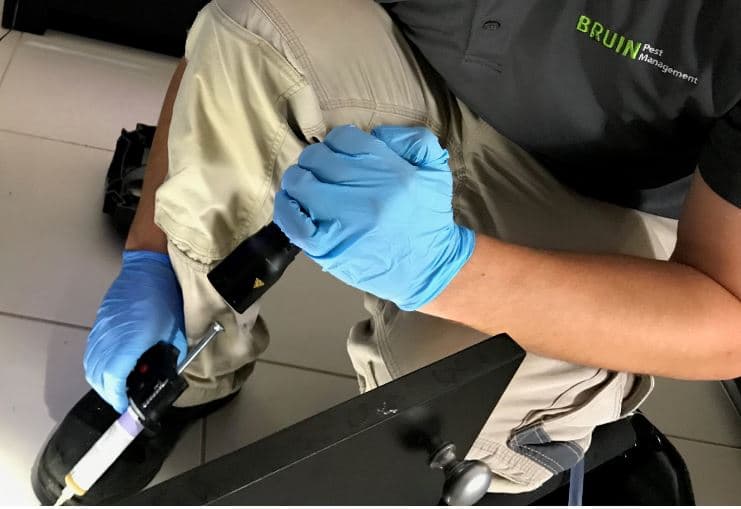
Bruin technician applying a targeted pest treatment at a Brisbane property

QBCC licensed 15483371

Family owned and operated

01

Surface sprays miss the nest and the eggs

Most retail sprays are contact products. They knock down the insects walking across the treated area at that moment, and little else. The pests you see on the wall are a small fraction of the colony.

The rest sit out of reach in the harbourage: wall cavities, under the fridge motor, behind the dishwasher, above the ceiling and in subfloors. Cockroach egg cases are especially stubborn. A single German cockroach ootheca can carry dozens of young, and the casing shields them from surface products entirely. Once those hatch, you are back to square one within a few weeks, which is why the problem seems to keep returning no matter how much you spray.

02

Wrong product, wrong dose, wrong place

Pest control is not one product for everything. Ants, cockroaches, spiders and silverfish respond to different actives, formulations and placements, and getting the match wrong wastes the treatment.

Dose is the other trap. Too little does nothing useful. Too much is not stronger, it just costs more, lingers where it should not, and raises the safety risk to your family and pets. Retail labels are deliberately general, so most people either under-treat the real harbourage or over-treat the visible living areas. A licensed technician reads the species and the conditions first, then chooses the product, the concentration and the exact placement to suit.

03

Repeated spraying can make it worse

Spraying the same repellent product over and over can actually scatter a colony rather than kill it. Cockroaches and ants sense the treated zone and simply relocate, splitting a single problem into several new ones deeper in the home.

Resistance is the bigger long-term issue. German cockroaches in particular are known to build tolerance to commonly overused actives. Every partial DIY hit that kills the weak insects but leaves the survivors to breed selects for a hardier population. Professionals rotate actives and lean on non-repellent products and targeted baits precisely to avoid breeding a resistant colony.

04

The exterior and entry points get ignored

Pests come from outside. If the treatment stops at the kitchen skirting, the pipeline of new arrivals never closes.

A proper general pest treatment works the exterior perimeter, the weep holes and window frames, the eaves, the subfloor and the entry points around pipes and doors, as well as the internal hot spots. That barrier approach is most of what keeps a Brisbane home clear through the warm months, and it is the part DIY almost always skips. Sealing and treating where pests enter matters more than chasing the ones already inside.

05

When DIY is fine, and when it is not

DIY has a genuine place. If you have light, occasional activity, keep good hygiene, seal food and take out the rubbish promptly, then a well-placed bait station and basic prevention will often hold the line. There is no need to call anyone for a stray ant trail after rain.

It is worth a licensed technician once the activity is established or keeps coming back: a persistent cockroach population in the kitchen, ants you have treated more than once, or any sign of a nest you cannot locate. General pest treatments start from $180, and a professional treats the source, the harbourage and the perimeter rather than just the surface, so the result actually lasts. If you have sprayed twice and it keeps returning, that is the signal to stop spending on cans and get it done once, properly.

Common questions

Pest and termite questions, answered

Why do the cockroaches come back after I spray?

Surface sprays only kill the roaches out in the open at the time. The colony and its egg cases sit hidden in wall cavities and behind appliances, shielded from the product. When those eggs hatch, usually within a few weeks, the population rebuilds. Clearing them for good means treating the harbourage and the source, not just the visible insects.

Is professional pest control really worth it over supermarket sprays?

For light, occasional activity, DIY baits and good hygiene are often enough. For an established or recurring infestation it usually is worth it. A technician identifies the species, chooses the right product and dose, treats the nest and the exterior perimeter, and avoids the resistance and spreading problems that repeated DIY spraying can cause.

Can spraying too much make a pest problem worse?

Yes. Over-spraying a repellent product can scatter a colony into new areas rather than kill it, turning one problem into several. Repeated partial treatments also help pests like German cockroaches build resistance over time. More product is not stronger control, and it raises the safety risk to your family and pets.

What can I safely do myself between professional visits?

Keep on top of hygiene: seal food, wipe up crumbs and grease, empty bins often and fix damp spots that attract pests. Well-placed bait stations for ants and cockroaches help hold light activity. Sealing gaps around pipes, doors and windows reduces new arrivals. These habits make any professional treatment last longer.

Nearby

We also treat homes nearby

Related services

Need a hand with pests in North Brisbane?

Book online, call the family-owned team rated 4.9 from 256 reviews, or book online and send us the details.

Call NowBook Online