
Bruin Pest Management

North Brisbane pest control

How to prevent spiders around your home

Spiders are one of the most common calls we get across Brisbane, and the good news is that most of them are manageable with a few consistent habits. The key thing to understand is that spiders are hunters, so they go wherever their food is. Reduce the insects around your home and you reduce the spiders. Here is how the two are connected, which species you are likely to see locally, and the practical steps that keep them at bay.

4.9from 256 Google reviews
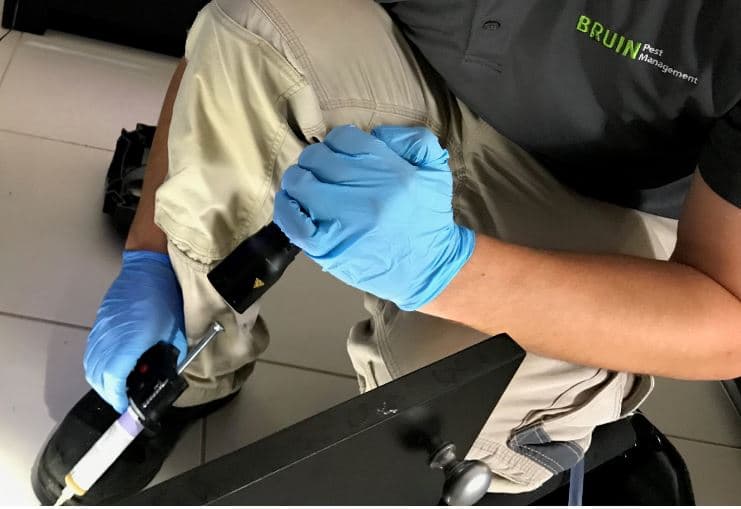
Bruin technician applying a targeted pest treatment at a Brisbane property

QBCC licensed 15483371

Family owned and operated

01

Why spiders come to your home

Spiders are not drawn to your house for shelter alone. They follow the insects they eat. Where there are flies, moths, mosquitoes, ants and cockroaches, spiders will set up nearby to feed on them. That is why a home with a healthy insect population almost always has a healthy spider population to match.

Brisbane's warm, humid, subtropical climate keeps prey insects active for most of the year, which is why spiders rarely disappear the way they might in colder parts of the country. Outdoor lighting makes it worse, as lights around eaves, entryways and patios draw in moths and flying insects at night, and the spiders simply move in to take advantage of the buffet.

02

Common spiders around Brisbane homes

A few species turn up again and again. Webbing spiders, such as orb weavers, string their webs across eaves, fences, gardens and anywhere flying insects travel, which is why you walk into a fresh web on the way to the bin. Huntsman spiders are large and fast, and they often come indoors, especially in warmer months, which unsettles people even though they are generally not considered dangerous and mostly want to get away from you.

Redback spiders are the one to treat with genuine caution. They are venomous and tend to hide in sheltered, undisturbed spots like sheds, garages, under outdoor furniture, in pot plant rims and around letterboxes. The sensible approach is calm and factual: wear gloves when reaching into stored items and outdoor furniture, and keep those areas tidy so redbacks have fewer places to settle. If a bite ever causes concern, seek medical attention.

03

Everyday prevention that works

Consistent, simple habits make the biggest difference. Clear webs regularly with a broom or brush around eaves, window frames, fences and doorways, as a knocked-down web tells a spider the spot is not safe to rebuild. Keep eaves, sheds, garages and storage areas tidy and decluttered, because clutter is exactly the kind of undisturbed shelter spiders prefer.

Reduce outdoor lighting where you can, or switch to warmer, less attractive globes and turn off lights you do not need, since fewer prey insects means fewer spiders. Trim back vegetation, shrubs and overhanging branches so they do not touch the house and act as a bridge indoors. Finally, seal gaps around doors, windows, weep holes and where pipes enter the home to cut off easy entry points. None is dramatic on its own, but together they steadily make your home less appealing.

04

Why treating the insects reduces the spiders

This is the part homeowners often miss. Because spiders follow their food, the most effective long-term way to reduce them is to reduce the insect population they rely on. A general pest treatment targets the ants, cockroaches and other insects around your home, and as that food source drops away, the spiders have far less reason to stay.

That is why a broad, ongoing approach beats squashing spiders one at a time. Chasing individual spiders never addresses why they were there in the first place. Bring the overall insect numbers down and the spider problem tends to shrink alongside it, which is exactly how our general pest control is designed to work.

05

When a professional treatment helps

If webs keep reappearing no matter how often you clear them, or you are regularly finding huntsman indoors or redbacks around the yard, a professional perimeter and eave treatment is worth considering. This targets the zones spiders favour, the eaves, external walls, fence lines and the perimeter of the home, and pairs well with a general treatment that lowers the insect population feeding them.

Timing matters in Brisbane. Treating in spring, before the summer heat drives insect and spider activity to its peak, gets ahead of the surge rather than reacting once numbers have built up. General pest treatments start from $180, and our spider control service focuses on the areas where spiders shelter and hunt.

Common questions

Pest and termite questions, answered

How do I stop spiders coming inside?

Reduce what draws them in. Spiders follow insects, so cutting the insect population with a general treatment removes their food source. Clear webs regularly, keep storage areas tidy, trim vegetation off the house, reduce outdoor lighting that attracts prey insects, and seal gaps around doors and windows. Together these steps make your home far less appealing to spiders.

Are the spiders around Brisbane homes dangerous?

Most are not. Webbing spiders and huntsman are common and, while huntsman are large and fast, they are generally not considered dangerous and prefer to avoid people. Redback spiders are the exception, as they are venomous and hide in sheds and outdoor furniture, so wear gloves in those spots. If a bite ever causes concern, seek medical attention.

Why do I keep getting spiders even after cleaning webs?

Because clearing webs treats the symptom, not the cause. Spiders return wherever their food is, so if the insects around your home stay plentiful, the spiders will keep coming back. The lasting fix is to reduce the insect population with a general pest treatment and a perimeter treatment, which removes both the food source and the sheltered spots spiders favour.

When is the best time to treat for spiders?

Spring is ideal, before the summer heat pushes insect and spider activity to its peak. Treating early lays down protection while numbers are still low, so the busy warmer months are much easier to manage. That said, treatment works well at any time of year, so if you already have a noticeable problem there is no need to wait for a particular season.

Nearby

We also treat homes nearby

Related services

Need a hand with pests in North Brisbane?

Book online, call the family-owned team rated 4.9 from 256 reviews, or book online and send us the details.

Call NowBook Online