
Bruin Pest Management

North Brisbane pest control

How to prepare your home for pest control

A little preparation before your pest control visit helps the technician treat the areas that matter and keeps everyone in the house safe. The steps below take most people under an hour, and they make a real difference to how well the treatment works. If anything is unclear, our team is happy to talk it through before the appointment.

4.9from 256 Google reviews
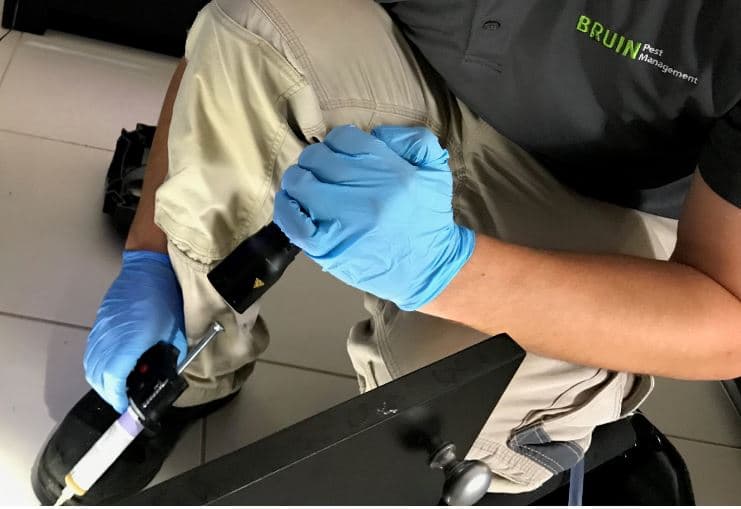
Bruin technician applying a targeted pest treatment at a Brisbane property

QBCC licensed 15483371

Family owned and operated

01

Step 1: Clear access to skirting boards and the outside perimeter

Most internal treatments follow the skirting boards, and most external treatments run along the base of the walls, so the technician needs a clear path around the edges of each room and around the outside of the house. Inside, pull furniture out a little where you can and move stored boxes away from the walls.

Outside, shift pot plants, wheelie bins, hoses, toys and stored items back from the wall line so the perimeter can be treated in one continuous band. In our subtropical Brisbane climate, ants and cockroaches travel along these edges and enter through tiny gaps, so an unbroken perimeter treatment is where a lot of the value sits.

02

Step 2: Tidy the kitchen and food areas

Kitchens and pantries are where crawling pests are most active, so this is the room worth spending a few minutes on. Put open food away in the fridge or in sealed containers, clear or cover any dishes on the bench, and empty the kitchen bin so nothing is competing with the treatment.

Wipe down the benches and give the floor a quick clean. A clean, clear kitchen means the products can be applied where cockroaches and ants actually run, rather than over crumbs and clutter that shorten how long the treatment stays effective.

03

Step 3: Protect pets, fish tanks and bedding

Fish and other aquarium life are sensitive to spray drift, so before an interior treatment, cover the tank and switch off the air pump for the duration of the visit and while surfaces dry. Turn the pump back on once the technician confirms the area is dry.

Put away pet food and water bowls, and move pet bedding out of the rooms being treated. Cats, dogs, birds and small animals should be secured in a room that is not being sprayed, or taken outside or for a walk during the appointment.

04

Step 4: Sweep and vacuum before the technician arrives

Sweeping and vacuuming beforehand is one of the most useful things you can do. It lifts dust, hair and crumbs so the treatment lands on clean surfaces and bonds properly, rather than sitting on a layer of debris that gets swept away later.

Vacuuming also removes some existing eggs and insects, which gives the treatment a head start. Empty the vacuum afterwards and put the contents in an outside bin so nothing is carried back indoors.

05

Step 5: Know what happens on the day and afterwards

Let the technician know if there are young children in the home or anyone with allergies or respiratory sensitivities, so the products and application can be adjusted. During the visit the technician treats the internal skirting lines, entry points, wet areas and the external perimeter, and will explain what has been used.

Afterwards there is a short re-entry and drying window, usually a couple of hours, and the technician will confirm the time on the day. Once dry, keep pets and family off treated surfaces until then. Importantly, do not mop or wipe the skirting boards straight after the treatment, as that removes the product before it has done its job. Normal cleaning of the middle of floors is fine; just leave the treated edges alone for a couple of weeks.

Common questions

Pest and termite questions, answered

How long before I can go back inside after pest control?

For a standard internal treatment, allow a couple of hours for surfaces to dry before returning to normal use. Your technician will confirm the exact re-entry time on the day, as it can vary with the products used and the weather. Keep pets and children off treated surfaces until everything is dry.

Can I mop the floors after a pest treatment?

You can mop the open middle of your floors normally, but avoid mopping or wiping the skirting boards and wall edges where the treatment was applied. Cleaning those areas removes the product before it can work. Leave the treated edges alone for around two weeks so the treatment stays put and keeps protecting the entry points.

Do I need to empty my kitchen cupboards?

You do not usually need to empty every cupboard. Put open or loose food into sealed containers or the fridge, clear the benchtops, and empty the kitchen bin. If you have a known pantry problem, mention it when booking so the technician can plan to treat inside that specific cupboard.

Nearby

We also treat homes nearby

Related services

Need a hand with pests in North Brisbane?

Book online, call the family-owned team rated 4.9 from 256 reviews, or book online and send us the details.

Call NowBook Online